


Fostering resilience, redefining support, transforming care.



Parkinson’s is a complex disease that defies predictability. Dozens of symptoms combine to make every experience unique.
The medical community lacks a unified approach to treatment, and access to specialists is woefully inadequate.
In this environment, patients feel lost, vulnerable and alone.
The Parkinson’s Resilience Institute is helping patients and care partners build personal resilience, and unifying medical providers around a whole-patient approach to care.

The medical community is struggling to manage the world’s fastest-growing neurological disorder.
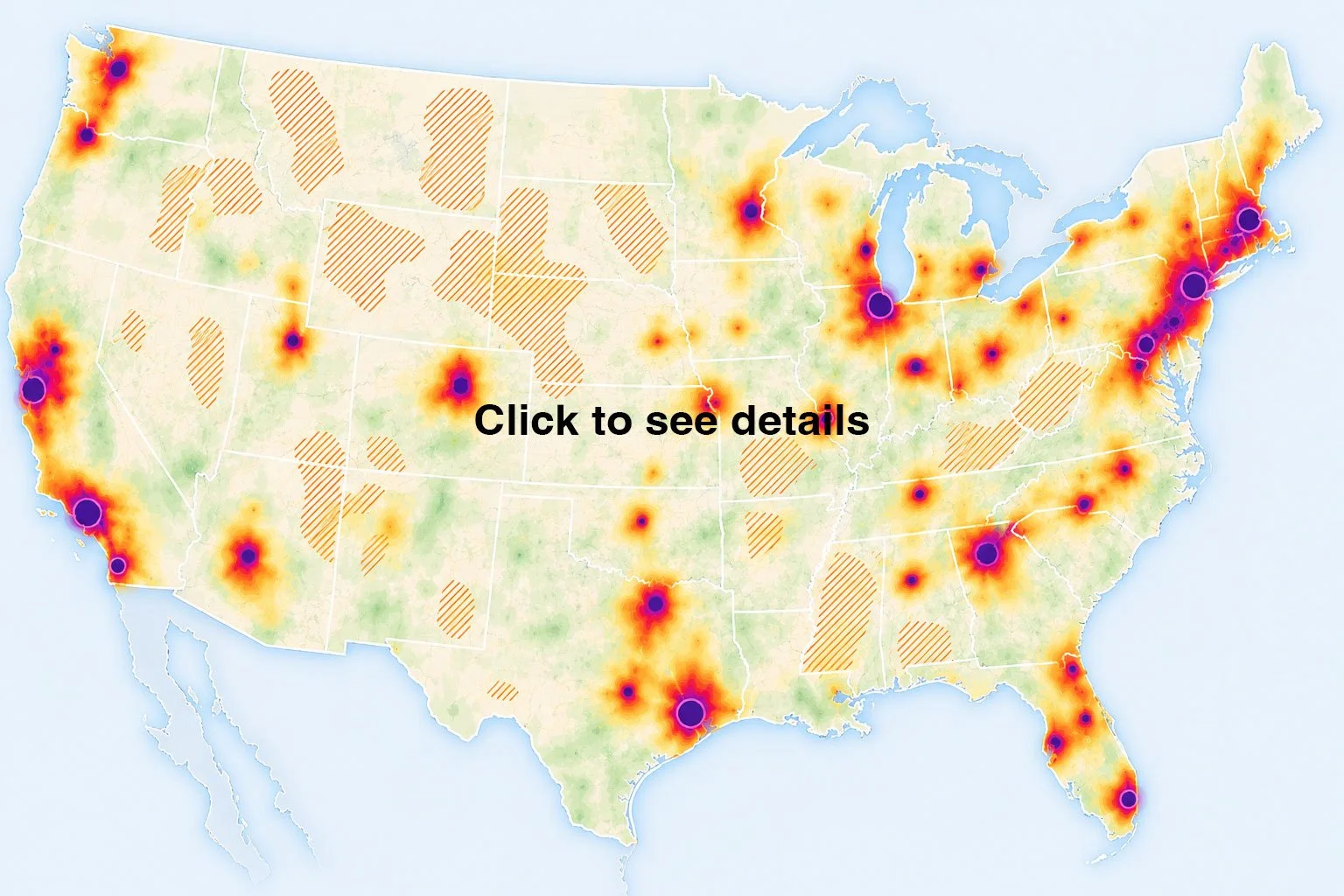
MDS neurologists are clustered around a handful of major urban areas, while vast areas of the country have virtually no access to specialized Parkinson’s care.
Today, around 1.1 million Americans are living with Parkinson’s disease, and around 90,000 new cases are diagnosed each year. Behind those numbers are individuals and families trying to make sense of a life-changing condition with too little guidance and too much uncertainty.
Specialized Parkinson’s care is limited and unevenly distributed. While there are roughly 17,000 neurologists in the United States, only about 9,000 actively treat Parkinson’s, and just a small fraction – around 670 – are trained as Movement Disorder Specialists. All but about 100 of these specialists are concentrated in major medical centers, leaving the rest of the country underserved. Nationwide, nearly 40% of people with Parkinson’s never see a neurologist in any given year, and only 9% ever see a Movement Disorder Specialist (MDS) neurologist.
Trying to Understand What No One Fully Explains
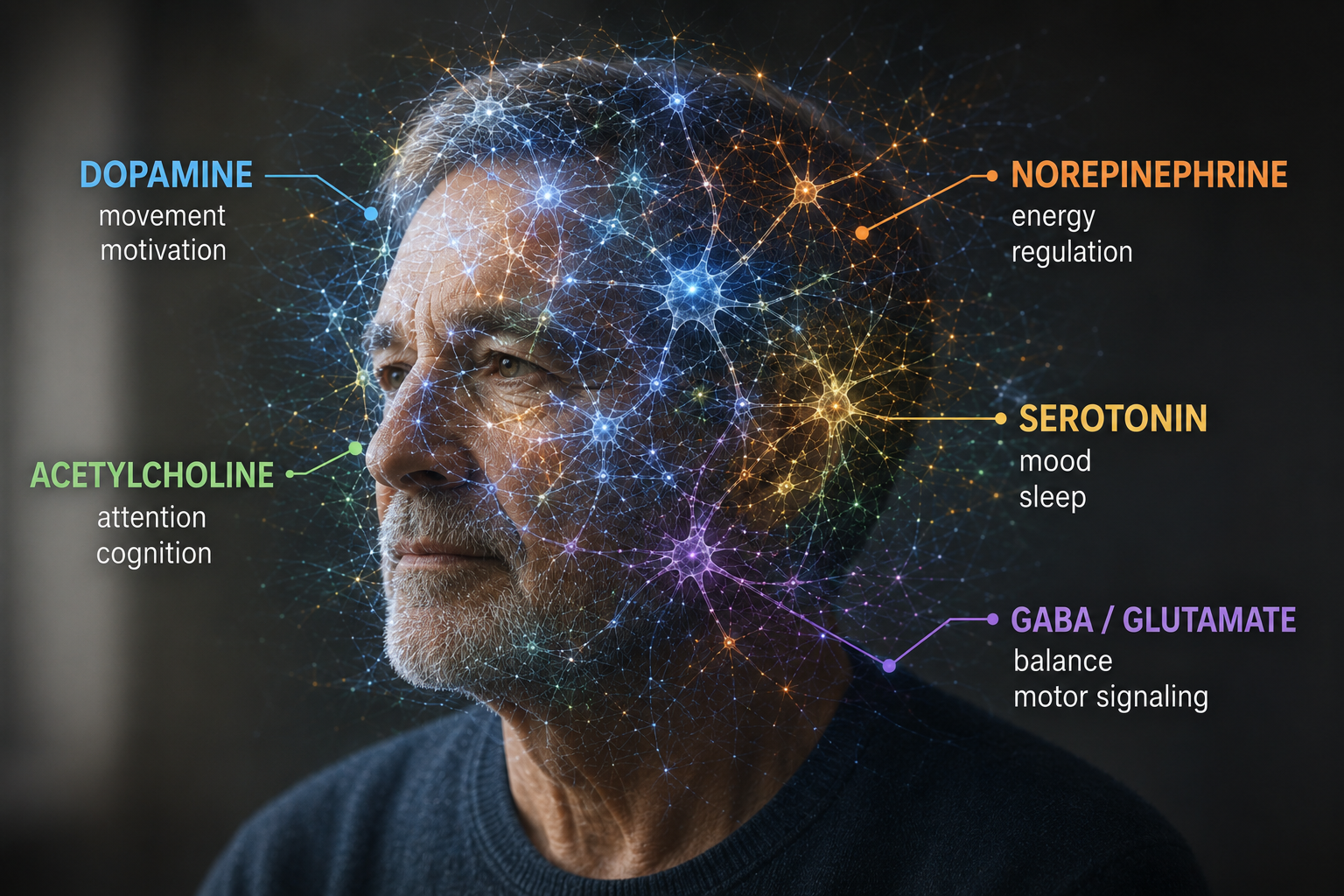
Parkinson’s disease affects all the neurotransmitters: Dopamine, Serotonin, GABA, Glutamate, Norepinephrine and Acetylcholine.
Parkinson’s is complicated. While dopamine loss drives the hallmark motor symptoms, Parkinson’s also disrupts other neurotransmitters. Changes in norepinephrine affect energy and regulation. Acetylcholine influences attention and cognition. Serotonin plays a role in mood and sleep. The balance between GABA and glutamate shapes motor signaling. Together, these and other neurotransmitter disruptions create a wide range of symptoms that often aren’t recognized as part of the PD spectrum.
This complexity leads to highly varied experiences from one person to the next. Patterns of symptoms, progression, and daily impact vary widely, yet clear, consistent information about this reality is not widely accessible. Many patients and caregivers never gain a full understanding of what the disease involves or how to navigate it over time.
Fortunately, progress is being made in bringing awareness and understanding, but this information is not evenly distributed across geographic or demographic boundaries.
We’re here to change all that.

Our mission is to help patients and caregivers build the resilience needed to live more fully with the disease, to standardize group support, and to have a meaningful impact on the state of Parkinson’s care nationwide.
Educating Patients and Building a Nationwide Network of Support Groups

We’re in the process of developing Parkinson’s Pilot, a video-based course offering patients and their caregivers a clear and grounded introduction to what the disease really is, what to expect, and how to navigate the realities of life with Parkinson’s.
Alongside Parkinson’s Pilot, we’re building the Parkinson’s Resilience Network, a nationwide ecosystem of facilitated support groups to give everyone caught in Parkinson’s crosshairs a community of real people dealing with the real-life challenges so many now face alone. PRI will train and certify patients, caregivers, volunteers and professionals to lead consistent, effective groups online and in-person.
Transforming Parkinson’s Care

Systems to manage Parkinson’s are lagging behind those for other degenerative diseases. It’s time those facing its challenges were given greater access to consistent care and support, and tools to build personal resilience, wherever they live.
Parkinson’s Resilience Institute aims to improve the quality of care Parkinson’s patients receive by building a coordinated framework of unified “Care Clusters.”
We also want to help expand the nationwide pool of Movement Disorder Specialists to treat the rapidly growing PD patient population consistently and effectively.
We’re creating a careforce of Parkinson’s Care Navigators, based on the care navigator model that has become common in cancer care.
In addition, we’re seeking ways to create dedicated Parkinson’s care services within senior living facilities, similar to memory care centers already in existence.
And we’re looking to make in-home care and community companionship more easily available to people who are isolated in their disease and needing human connection.
These initiatives will help ensure every Parkinson’s patient – and their caregivers – have access to world-class medical solutions and tools to build personal resilience.